
Beyond the Port: Village Life in Fiji

During Summer Sea Term 2026, cadets and crew had the opportunity to participate in a full-day cultural excursion during the voyage’s port call in Fiji. Led by Dawn Neill, a Cal Poly anthropology professor, the program introduced participants to authentic Fijian culture through hands-on experiences and interactions with members of the local community.
Not only did I help organize this popular cultural excursion by managing the sign-up process, but I also had the opportunity to participate on the final day. Interest was high from the moment registration opened; every available spot filled quickly, and a waitlist was needed to accommodate additional interest.
I attended on June 11, the final day of the program. The day began at 8 a.m. as we boarded a traditional Fijian-style bus. As we got underway, professor Neill began explaining Fijian culture and customs.
She shared how Fiji became an independent nation in 1970 after being a British colony and explained how the British brought approximately 60,000 people from India to Fiji to work on sugar plantations. She also discussed how Fijian life is very different from ours, noting that people are often shy but welcoming and willing to answer questions. One thing she emphasized was that many activities in Fijian culture begin with a prayer.
After a two-hour drive and a quick stop, we were taught how to wear a sulu, a traditional Fijian wrap cloth. We then arrived at Vuisiga Village, where we were greeted by kindergarten students singing in Hindi.
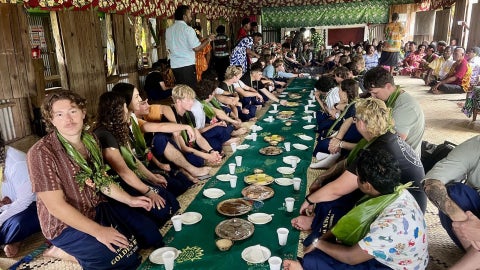
As we stepped off the bus, the village welcomed us with a traditional song before escorting us to the community hall. We removed our shoes before entering and participated in a welcome ceremony and blessing from the village chief. He welcomed us to enjoy their food, explore the village and swim in the nearby river.
Following the ceremony, we were invited to breakfast. We sat together on the floor, just as the villagers do, and enjoyed a variety of homemade breads, Tang and warm tea with milk. The meal was served in shifts, creating a steady flow of conversation and community as groups rotated in and out to give others an opportunity to sit and enjoy their meal.
After breakfast, we rotated through six different stations designed to help us experience village life firsthand. My first station focused on a traditional dessert made from cassava, coconut and brown sugar. The result was one of the most delicious desserts I have ever tasted.
The second station introduced us to green kava. Unlike the more commonly known brown kava powder, green kava is freshly prepared and considered sacred because of its ceremonial significance. When I tried it for the first time, it had a woody and earthy flavor.
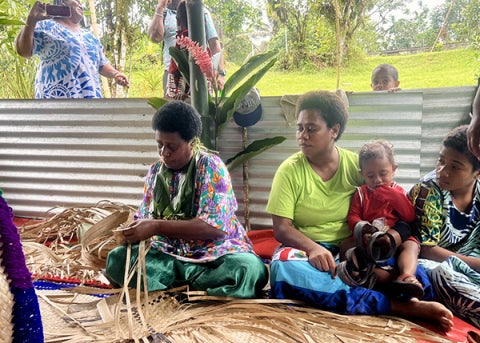
The third station was mat weaving. We learned that the craft is traditionally practiced by women in the village. The mats are either sold about two hours away in Suva, the nation's capital, or used in community halls throughout the village.
The fourth station focused on dye printing. Cadets and crew were encouraged to bring extra shirts so they could create their own printed designs.
The fifth station covered traditional kava preparation and ceremonies, while the sixth station introduced us to the lovo. We learned how this traditional underground cooking method works and how it is typically reserved for special occasions and celebrations.
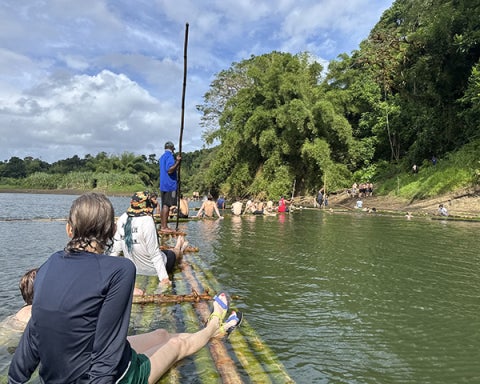
After completing the stations, we made our way to a nearby river, where another memorable part of the day awaited us. Reaching the river required a hike through muddy jungle trails, which only added to the adventure. Once we arrived, we cooled off in the water and rode on homemade bamboo rafts.
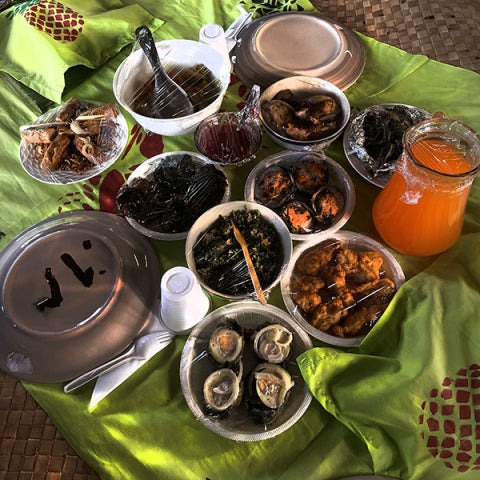
Following our swim, we returned to the village for lunch. The meal included taro leaf pancakes, lovo chicken, mussels and many other traditional dishes. Everything was absolutely delicious.
After lunch, the villagers treated us to songs and dances. They performed a meke, a traditional Fijian storytelling dance, and invited us to join in the celebration. Before we departed, they offered a prayer for our safe journey back to the United States and sang a heartfelt goodbye song as we boarded the bus.
This experience reminded me of my family’s roots in the Philippines. From eating on the floor and being surrounded by lush greenery to seeing people genuinely happy with the simple things in life, I found myself thinking about my mother and the times we traveled back to our province when I was younger. It reminded me how similar village life can be around the world, regardless of the country.
This experience felt authentic, peaceful and refreshing. After working seven days a week and spending nearly 40 days at sea, it provided a welcome escape from the distractions of the internet, the noise of busy cities and the fast pace of modern life. It was a once-in-a-lifetime experience and one I will always cherish.
Cultural excursions like this help Cal Poly Maritime Academy cadets and crew learn about the communities and cultures they encounter during Summer Sea Term. These experiences foster meaningful connections, broaden perspectives and reinforce the shared humanity that connects people across the globe.
Fair winds and calm seas ...
Check back often and follow the voyage with our series that gives the latest news from Summer Sea Term! TSGB will travel to San Diego; Papeete, Tahiti; Suva, Fiji; Honolulu; and Los Angeles prior to returning to Vallejo on July 6.


