
From Sea Time to Career Success: Why Summer Sea Term Matters

As Training Ship Golden Bear makes its way across the Pacific during Summer Sea Term 2026, 285 Cal Poly Maritime Academy cadets are gaining something far more valuable than nautical miles.
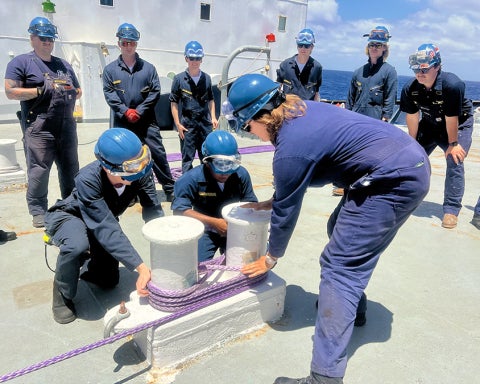
They are gaining the experience that will help launch their careers.
For maritime students, Summer Sea Term is more than a voyage. It is where classroom learning becomes real-world experience. Cadets stand watch, operate complex systems, work as part of a professional crew and gain the sea time required to earn a U.S. Coast Guard license.
The value of that experience is reflected in the career outcomes of Cal Poly Maritime Academy graduates.
Among recent graduates in Marine Transportation, Marine Engineering Technology and Mechanical Engineering who earned a U.S. Coast Guard license, 95% were employed or continuing their education shortly after graduation. Their average starting salary was $111,052, and one-quarter received hiring bonuses ranging from $10,000 to $58,000.
Those outcomes are driven by a combination of academic preparation, professional licensing and hands-on experience.
"Summer Sea Term gives students an opportunity to demonstrate the knowledge, judgment and professionalism employers are looking for in offshore and onshore workplaces," said Cal Poly Maritime Academy Career Services Director Stephanie Francis. "By the time they graduate, our cadets have already operated in complex, high-stakes environments that require teamwork, leadership and accountability."
As the maritime industry faces a growing workforce shortage, that experience is increasingly valuable.
An aging workforce and the retirement of senior vessel officers have created strong demand for licensed mariners. Employers across the maritime industry are actively recruiting graduates for positions aboard commercial vessels, government ships, tug and barge operations, cruise lines and emerging vessel technologies.
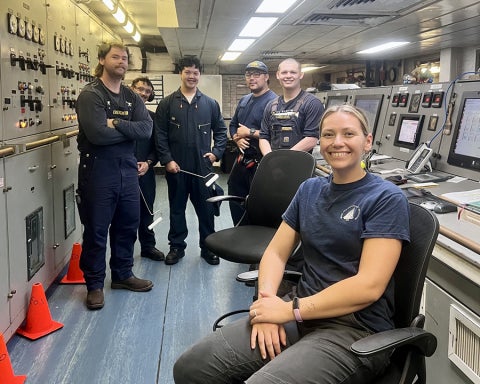
The demand is especially strong for engineering officers.
Career Services at Cal Poly Maritime Academy has seen a significant increase in direct recruiting inquiries, job postings and employer outreach for licensed engineers. Because of the practical training and responsibility cadets receive while earning their license, some employers have indicated they are willing to hire academy engineering graduates into positions that would typically require several years of industry experience, according to Francis. Employers increasingly seek licensed officers who combine traditional seamanship with the technical expertise needed to operate, build and repair next-generation vessel systems. As commercial fleets adopt alternative fuels and advanced vessel technologies, opportunities continue to expand.
Maritime employers know the cadets coming out of Cal Poly Maritime Academy have practical experience that is in high demand. They have worked with complex systems, stood watches, adapted to changing conditions and learned to solve problems in real time. For employers, that makes them highly competitive candidates from day one.
Those opportunities are reflected in the academy's career fairs, which attract approximately 200 organizations and more than 300 industry representatives to campus each year. Employers represent more than a dozen sectors, including commercial shipping, shipbuilding, government fleets, logistics, offshore services, maritime technology, sustainability and marine construction.
For many cadets, Summer Sea Term serves as a bridge to those opportunities.
Cadets completing their first voyage aboard Golden Bear return to campus with a deeper understanding of shipboard operations and professional expectations. They bring that experience to career fairs, where they meet employers and pursue opportunities to accrue required sea time on commercial vessels the following summer.
Cadets returning from their second Summer Sea Term often begin preparing for U.S. Coast Guard licensing exams while interviewing for full-time positions. Most will launch careers at sea, while others may move into shipyard management, transportation engineering, government service and maritime infrastructure.
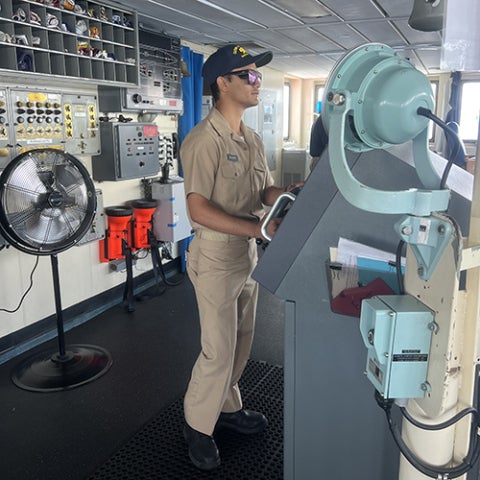
Over the past three years, approximately 85% of licensed graduates have begun their careers aboard commercial or government vessels. Regardless of where their careers ultimately lead, the foundation is the same: a maritime license, sea service and hands-on experience.
The lessons learned during Summer Sea Term extend beyond navigation and engineering. Cadets learn to lead, communicate, solve problems under pressure and contribute to the safe operation of a vessel around the clock.
Those experiences help explain why Cal Poly Maritime Academy graduates are in demand.
One thing is clear: the skills gained through Summer Sea Term open doors across the maritime industry.
The voyage may last only a few months, but the skills, credentials and experience gained at sea can shape a career for decades.
Fair winds and calm seas …
Check back often and follow the voyage with our series that gives the latest news from Summer Sea Term! TSGB will travel to San Diego; Papeete, Tahiti; Suva, Fiji; Honolulu; and Los Angeles prior to returning to Vallejo on July 6.


