
From Cadets to Crew

Summer Sea Term is often viewed as a training voyage, but one of its greatest lessons is the importance of teamwork.
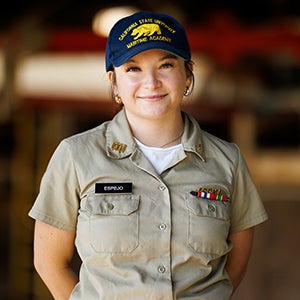
Living and working aboard a ship teaches cadets that success is never achieved alone. Every operation, from navigating the vessel to maintaining machinery and conducting safety drills, depends on people working together toward a common goal.
As we crossed the equator and entered the Southern Hemisphere, it became clear that every mile traveled was the result of countless individuals doing their part.
The bridge team, deck crew, engineering department, galley staff and cadets all contributed to keeping the ship operating safely and efficiently. No single person could accomplish the voyage alone.
The fire and boat drills highlighted this lesson even further. During an emergency, teamwork is not optional; it is essential. Cadets learned to communicate clearly, trust one another and perform their assigned responsibilities with confidence.
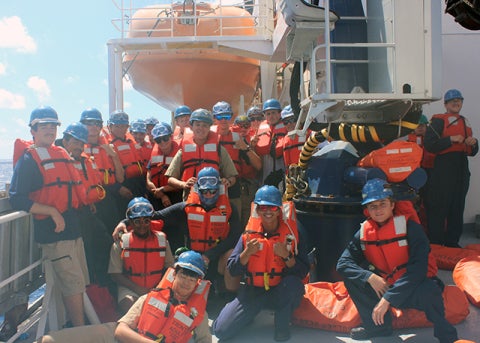
Whether mustering at emergency stations, launching rescue equipment or responding to simulated casualties, every person's role contributed to the overall success of the drill. These exercises reinforced that safety at sea depends on coordination and mutual trust.
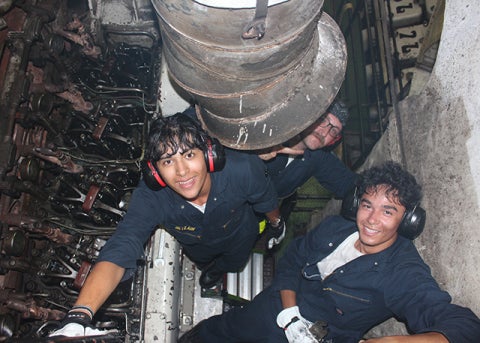
Engineering cadets experienced teamwork firsthand through hands-on learning in the engine room. Maintaining and operating a vessel's machinery requires constant collaboration.
Students worked alongside licensed engineers and fellow cadets, learning how communication and cooperation keep critical systems running around the clock. Every maintenance task and watchstanding assignment demonstrated that maritime operations are built on teamwork.
Similarly, Deck Company 2D's participation in aft steering operations showed how multiple teams must work together to control a vessel. During steering drills, communication between the bridge and steering gear room becomes crucial.
Cadets learned that successful ship handling relies not only on technical knowledge but also on precise coordination between departments and personnel.
Life aboard the ship also strengthened relationships beyond work assignments. Living in close quarters, sharing meals, standing watches together and overcoming daily challenges created bonds that cannot be replicated in a classroom.
Cadets learned to rely on one another, support their shipmates and work through difficulties as a team. These experiences helped transform classmates into trusted colleagues and friends.
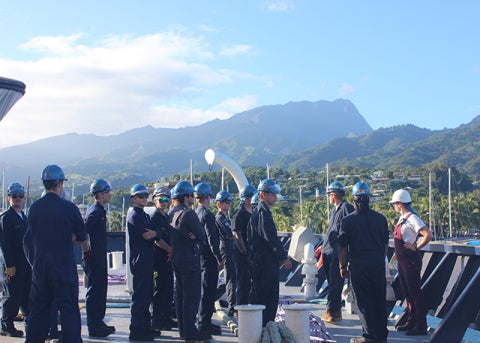
After 17 days at sea, arriving in Tahiti felt like a collective achievement shared by everyone aboard Training Ship Golden Bear, including cadets, ship staff, professors and crew alike. The sight of land on the horizon was rewarding because every person had contributed to the voyage in some way.
Professors continued educating students beyond the classroom, ship staff coordinated daily operations and logistics, crew members kept the vessel running safely and efficiently, and cadets applied what they learned through watches, drills and hands-on training. Reaching Tahiti was not the accomplishment of any one individual or department; it was the result of a shipboard community working together toward a common goal.
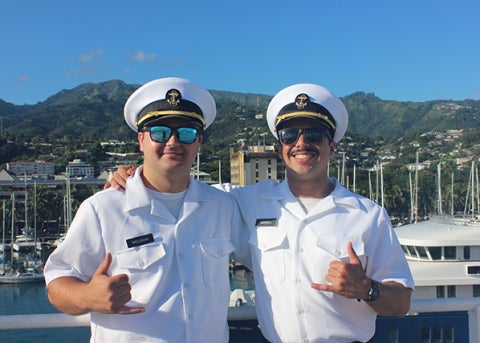
The warm welcome we received in Tahiti made the experience even more meaningful. Seeing the island after weeks of open ocean served as a reminder that the challenges, long days and hard work underway had all led to this moment.
Summer Sea Term teaches technical skills and maritime knowledge, but perhaps its most valuable lesson is that success at sea depends on teamwork. The voyage to Tahiti showed that when people trust one another, communicate effectively and work toward a shared mission, they can accomplish far more together than they ever could alone.
Fair winds and calm seas…
Check back often and follow the voyage with our series that gives the latest news from Summer Sea Term! TSGB will travel to San Diego; Papeete, Tahiti; Suva, Fiji; Honolulu; and Los Angeles prior to returning to Vallejo on July 6.


