
Engineering Deep Dive: Watch Edition

What Are Watch Rotations?
Aboard the Training Ship Golden Bear, watch rotations are hands-on experiences that help cadets learn the ins and outs of the engine room. The ship is divided into three different sets of watches. The first is the 0000-0400 (midnight – 4 a.m.) / 1200-1600 (noon – 4 p.m.) watch, the second is the 0400-0800 (4 – 8 a.m.) / 1600-2000 (4 – 8 p.m.) watch, and the third is the 0800-1200 (8 a.m. – noon) / 2000-0000 (8 p.m. – midnight) watch.
Once cadets are assigned to a watch rotation, they stay on the schedule for the entire three-day rotation. Each watch comes with its own challenges, and every student develops a preference based on what best fits their routine.
Preparing for Watch Duty
As an engineering cadet, my workday begins well before the official watch starts. We are expected to arrive at least forty-five minutes early. The first fifteen minutes are spent conducting a “pre-round” of the machinery spaces.
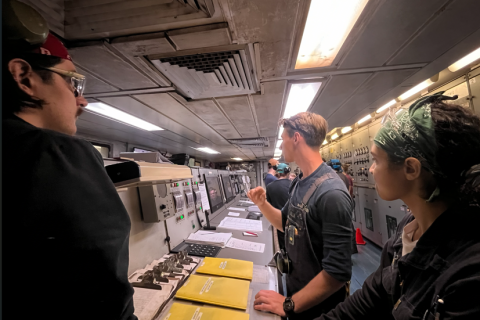
During this time, I walk through the engine room and inspect the operating equipment to make sure everything is functioning normally.
Thirty minutes before the watch officially begins, the oncoming and offgoing watches conduct “changeover.” During changeover, the previous watch team informs us about any ongoing issues, maintenance concerns, or unusual conditions in the plant.
This process is important because it ensures continuity between watch teams and helps prevent small problems from becoming major ones.
My Favorite Watch Schedule
My favorite watch rotation is the 0800-1200 / 2000-0000 watch. I enjoy this schedule because it feels the closest to a normal daily routine. I can wake up around 0600, eat breakfast, and attend formation with everyone else aboard the ship. After that, I report to watch around 0715 and remain on duty until approximately 1145.
Once the watch is over, I still have most of the day available to spend with friends, do laundry, study, or relax. Later that evening, I return for the night watch, finish my duties, and usually head to bed around midnight. Compared to the other watch schedules, this rotation feels far more manageable because I do not have to wake up in the middle of the night to report for duty. However, everyone is different.
Freshman Watch Responsibilities
For freshmen aboard the ship, the primary responsibility is completing rounds throughout the machinery spaces. During rounds, freshmen inspect equipment, record temperatures and pressures, and look for anything unusual within the plant. They also pay close attention to their surroundings, checking for leaks, abnormal sounds, or anything visually out of place.
These rounds are extremely important because they help ensure the safe operation of the ship’s engineering plant. Even small irregularities can signal larger problems, so attention to detail is essential. Through this process, they learn how different systems aboard the ship operate and how engineers monitor equipment during daily operations.
Senior Leadership on Watch
The seniors aboard watch have a much greater level of responsibility. My job is not only to maintain the plant, but also to mentor and teach the freshmen. When problems arise, the seniors evaluate the situation and determine how serious the issue may be. Some problems require only minor adjustments, while others demand immediate action to prevent further complications.
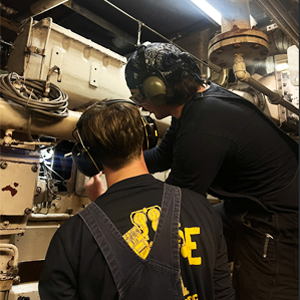
It is also my responsibility to maintain the ship’s logbook. This includes recording operating conditions, equipment readings, and any significant events that occur during the watch.
Keeping accurate records is critical because it creates a history of the ship’s operations and helps engineers track recurring issues.
One of the best parts of watchstanding as a senior is the opportunity to teach the freshmen. This hands-on learning environment strengthens everyone’s understanding of the engineering systems aboard the ship.
When seniors explain systems or demonstrate repairs, they reinforce their own knowledge while helping freshmen gain confidence and experience.
Teaching requires a deep understanding of the machinery and systems on board. Because of this, seniors must constantly refresh and expand their knowledge so they can properly guide the younger cadets. This creates an environment where both freshmen and seniors continue learning throughout every watch rotation.
Fair winds and calm seas…
Check back often and follow the voyage with our series that gives the latest news from Summer Sea Term! TSGB will travel to San Diego; Papeete, Tahiti; Suva, Fiji; Honolulu; and Los Angeles prior to returning to Vallejo. on July 6.


